How BIM and CAD Renew Modern Interior Construction
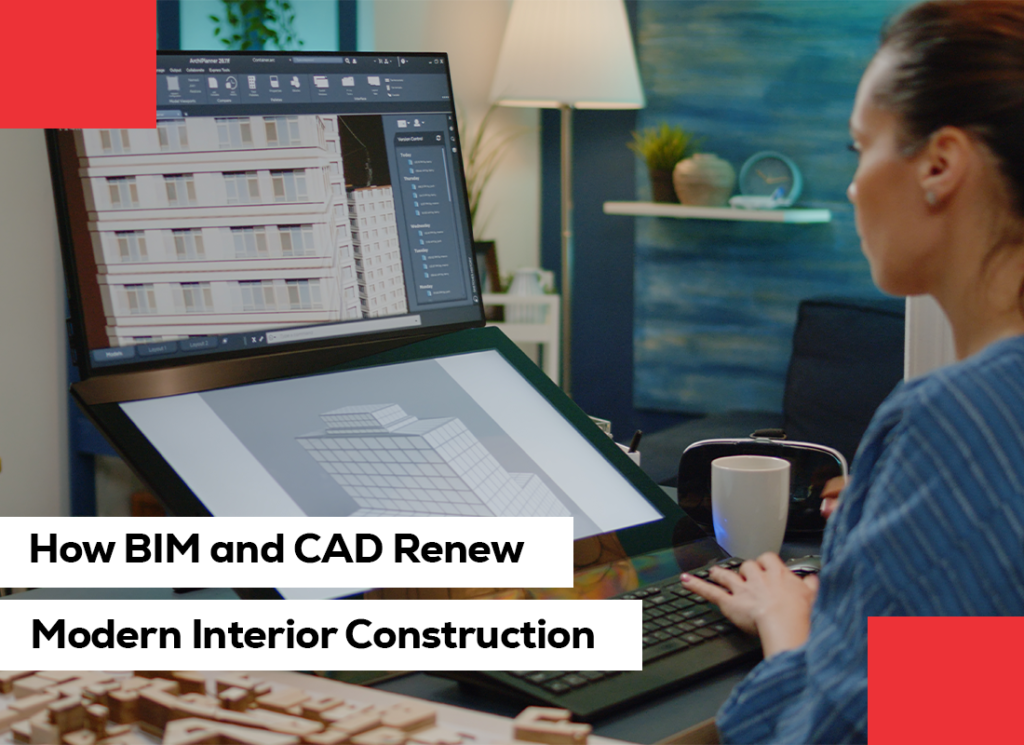
Interior construction has entered a new era, an era defined by precision, efficiency, and immersive digital planning. This rapidly changing client requirement, coupled with increased project complexities, indicates that the industry can no longer rely on conventional design and coordination methods. At Geninfo Solutions, we have witnessed how the combination of BIM services and CAD services has reshaped the way interior spaces are conceptualized, designed, and built. What once took weeks can now be executed in days, and what once required assumptions can now be validated through rich digital data. It is not only a technological transformation, but also one in which the collaboration among design and construction teams, the making of decisions, and the final delivery of space have undergone significant changes. Powered by high-accuracy modeling, integrated workflows, and structured BIM project management, the interior construction sector now leverages digital innovation to achieve results that are smarter, faster, and far more reliable. The Growing Complexity of Modern Interior Construction Modern interior projects go beyond just upgrading designs. They demand: Customized elements Advanced lighting systems Mechanical and Electrical Integration Material accuracy Strict compliance with safety standards Accelerated project schedules In this environment, clients demand creative interior spaces that meet functional and operational needs. Meeting this balance requires a workflow that merges creativity and precision. BIM services and CAD services play an important role in that regard. They put design conceptualization into order, avoid conflicts, and allow for the predictability of projects right from the start. BIM – The Digital Backbone of Interior Projects BIM services have become an essential foundation for modern interior construction due to the thorough digital representation of space-structural, architectural, and combined MEP details in one coherent model. This holistic approach eliminates the guesswork often associated with interior renovations or new fit-outs. 1. Accurate Spatial Understanding By taking accurate BIM models, designers and engineers develop a sense of spatial limitations and opportunities. Unlike traditional drawings, BIM offers depth, interaction, and detailed visualisation. 2. Design Validation and Clash-Free Coordination Everything inside the building, from furniture placements to ceiling design, duct systems, and electrical layouts, is well coordinated. This reduces construction errors and allows for every element to fit in space without conflict. 3. Improved Collaboration The stakeholders will look at the same information in real-time and make better decisions, thus avoiding delays in projects. Our experts integrate workflows that eliminate silos and encourage unified project development. 4. Lifecycle Benefits It acts as a long-term asset for facility managers, offering them smarter maintenance and asset tracking for interior components. At Geninfo Solutions, our aim in each project is to provide accurate, intelligent, and operationally valid models according to the client’s needs, thereby enhancing the value of BIM throughout the project lifecycle. Importance of CAD Continues in Interior Construction While BIM holds prominence and dominance as the digital foundation, CAD services remain a vital part of interior workflows. CAD drawings provide the precision that consultants, interior designers, and contractors depend on. Our CAD Services Support Interior Construction in Providing: Detailed Technical Drawings Floor plans, elevations, sections, and fabrication details that are accurate and consistent. Faster Drafting Cycles For producing clean and fast production documents that are necessary for approvals and execution, CAD remains unmatched. Interoperability Between Disciplines CAD drawings are easily integrated into BIM models, thus enhancing communication and documentation. By integrating the powers of CAD and BIM, we guarantee that the interior construction workflows will be truly detailed and well-coordinated, thus bridging the gap between planning and execution. Virtual Construction and Smart Visualization A major shift in the industry now is the adoption of Virtual Construction Services that enable clients and design teams to visualize the interior environment before it is actually constructed. Teams can, through 3D walkthroughs, clash simulations, and even interactive digital environments: Preview spatial flow and aesthetics Validate furniture placements Test lighting and material finishes Identify coordination problems early These virtual experiences reduce risks and build confidence in design decisions. Geninfo Solutions integrates Virtual Construction with BIM services and BIM modelling services to offer clients a holistic digital journey from concept to delivery. Precision Through BIM Modelling Services Our value-added BIM modeling services ensure that every interior detail, from ceiling systems to MEP components, is accurately replicated. These models support: Material Planning Exact quantities of flooring, wall finishes, partitions, and furniture. Coordination & Compliance Ensure that interiors meet technical standards and safety codes. Seamless Installation Workflows Contractors benefit from data-rich models that guide on-site installation with precision. We use highly intelligent models to help teams avoid conflict and place every interior element exactly where it should be. BIM Project Management: Leading Interiors toward Predictable Outcomes Modern interior construction is fast-paced, deadline-driven, and coordination-heavy, thereby requiring structured management of BIM projects to attain success. Our approach ensures: Complete Visibility at All Stages From conceptual design to installation, stakeholders remain up to date with real-time insights. Standardized Workflows We use international standards for BIM, thus ensuring uniformity and reducing project risks. Integrated Communication All teams-designers, engineers, consultants, and contractors-work on integrated digital platforms that enhance communication speed and quality. Early Issue Resolution Conflicts are identified early within the BIM environment, thus preventing costly rework on-site. Strong BIM project management makes interior construction more controlled and predictable, with higher alignment with the client’s expectations. It also enhances scheduling and reduces project overruns, two major challenges in interior development. How BIM and CAD Together Transform Interior Construction The joint effort of BIM and CAD creates a powerful ecosystem that renews how interior construction is delivered. Here’s how the two systems work together: Concept to Detailing While BIM captures the overall vision, CAD provides the technical details and drawings. 3D Visualization to 2D Documentation BIM provides real-world representation, whereas CAD shapes the execution documents. Coordination to Fabrication BIM ensures clash-free coordination, whereas CAD finalizes fabrication drawings. Digital Review to Physical Build Put together, they simplify approval workflows and facilitate on-ground construction. Here at Geninfo Solutions, we leverage all the strengths of these two technologies
Scan to BIM and Laser Scanning Shaping Modern Building Models
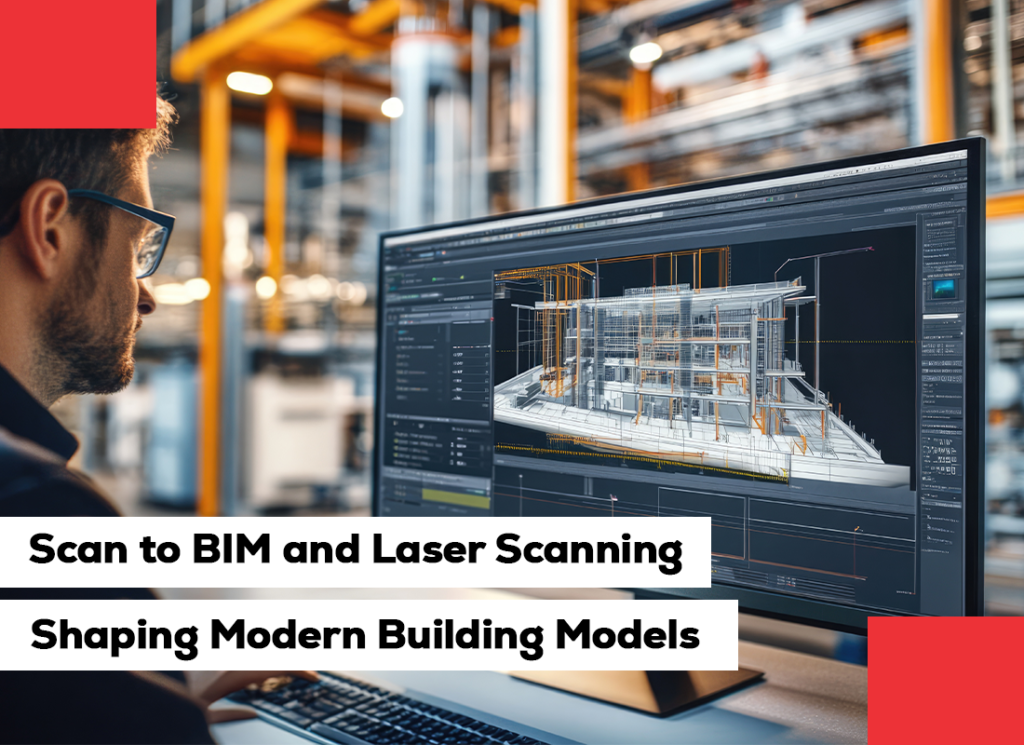
In the fast-changing world of architecture, engineering, and construction, accuracy is not a luxury but an absolute necessity. As buildings get more intricate and timelines get tighter, the industry relies on tools that provide speed, precision, and enduring efficiency. At Geninfo Solutions, we have seen firsthand how scan-to-BIM services and high-definition laser scanning reshape how teams document, design, and deliver building models. These technologies are now central to next‑generation digital workflows, blending in seamlessly with BIM project management and other AEC operations. This combination of capturing the physical reality and creating digital models helps stakeholders better understand spaces, find mistakes earlier, and collaborate more smoothly. Through our experience in BIM services, virtual construction services, and BIM consulting services, we lead clients toward workflows that have better outcomes from concept through facility management. How Laser Scanning is Changing Building Documentation Laser scanning has become one of modern construction’s most dependable tools. The technology captures millions of data points in minutes, translating physical spaces into highly accurate point clouds. These point clouds underpin accurate digital models and have become indispensable for renovations, restorations, and large infrastructure projects. Traditional site measurements are slow and expose teams to safety risks. Laser scanning tackles these challenges by: Providing fast and accurate spatial data Eliminating manual measurement errors Minimising repeated site visits Creating a digital base for scan-to-BIM Because all the details are visually and spatially captured, teams can depend on consistent, error-free data. At Geninfo Solutions, this technology makes up the core of our reality capture approach to make sure that the models we create give architects, engineers, and contractors maximum clarity. Scan to BIM: Converting Reality into Intelligent Models Laser scanning captures the physical world, while scan-to-BIM services translate that into functional, parametric BIM models. This conversion enables stakeholders to explore as-built conditions in a smart digital environment. Projects benefit from: As-built accuracies reflecting existing conditions, including their variances from the original drawings, are very important in renovation or adaptive reuse. Clash-free coordination by weaving scanned models into coordinated workflows Support for facility management, wherein BIM models are used over the long term for operations, maintenance planning, and asset tracking Geninfo Solutions combines BIM services knowledge with the latest modeling techniques to create detailed, rule-compliant models custom-fit for clients’ needs. Why Scan-to-BIM is Important for Modern Construction Digital transformation pushes organizations toward smarter workflows. Scan-to-BIM is key in enabling: Faster Project Delivery by cutting time on manual docs and speeding design via BIM Smarter Collaboration with the exact-condition models that reduce misunderstanding and keep people in sync Construction Quality: Misalignments were detected well in advance, thus with less delay. The capabilities suit hospitals, airports, manufacturing sites, heritage buildings, and offices, among others. Integrating Scan-to-BIM with Virtual Construction The value of virtual construction services in today’s digital-first construction scene is immense. Coupled with scan-to-BIM, they create a workflow that is predictive and highly efficient. Simulation, clash detection, 4D planning, and virtual walkthroughs allow the stakeholders to: Clear visibility of future phases Enhanced perception of spatial relations A safe place to try out planning decisions Higher accuracy in cost, schedule, and resource estimates This integration will help teams foresee problems before they even occur and will improve design intent and constructability. Geninfo Solutions focuses on this synergy to help clients have smooth project execution. Smarter Decisions: Supporting BIM through Project Management A powerful BIM model is just the beginning. Effective execution requires structured workflows, technical know-how, and tight coordination. Our BIM project management approach keeps teams aligned with goals, standards, and digital delivery requirements. By incorporating scan-to-BIM data into the process, we add: More accurate execution planning Real-time insights into site conditions Better coordination with trades and consultants Reduced rework, delays, and cost overruns With two decades in AEC, we guide teams through the full digital lifecycle and ensure a smooth flow of data across disciplines, phases, and platforms. Lessons the Industry Has Learned from Scan-to-BIM Adoption 1. Precision Is Non-Negotiable Inaccurate site measurements are the driver of problems. Scan-to-BIM makes sure that everything gets documented down to the last detail, from beams to MEP lines. 2. Early Planning Saves Time and Money Projects that started with scan-to-BIM modeling experienced fewer surprises during construction. 3. Digital Collaboration Platforms Reduce Conflicts Coordination is easier using the same digital data for architects, engineers, and contractors. 4. Scanning Supports Sustainability Therefore, proper modeling helps reduce material waste through correct calculation and planning. 5. Long-term Asset Management Improves Facility managers benefit from a highly detailed as-built BIM model years after completion. How Geninfo Solutions delivers Excellence in Scan-to-BIM? Geninfo Solutions is a trusted BIM partner, refining workflows that ensure quality and consistency at every touch point. Our approach includes: High-Definition 3D Laser Scanning: As-built conditions captured safely and effectively in detail. Smart Model Generation: Converting point clouds into precise BIM models for documentation, coordination, and FM purposes Quality Checks and Validation: Multiple review rounds to assure compliance, precision, and usability. Integration with Project Workflows: Embedding BIM outputs into larger frameworks, including BIM Project Management. With broad multidisciplinary expertise and a track record of large-scale digital projects, Geninfo Solutions helps clients adopt smarter, data-driven construction methods. The Future of Model Building: Faster, Smarter & More Connected As construction continues to evolve, so will the adoption of scan-to-BIM workflows. The drive for digitization, sustainability, and efficiency will increase the reliance on accurate reality capture and intelligent BIM outputs. Geninfo Solutions is committed to helping teams drive this transformation. Our scan-to-BIM services, BIM services, virtual construction, and structured workflows enable better decision-making, stronger collaboration, and more predictable outcomes. Scan-to-BIM services are not just a technological solution but a gateway to smarter, safer, more efficient construction. As this shift in the industry continues, we will remain dedicated to the empowerment of our clients through expertise, innovation, and digital excellence.