
BIM Project Management For Efficient Project Delivery
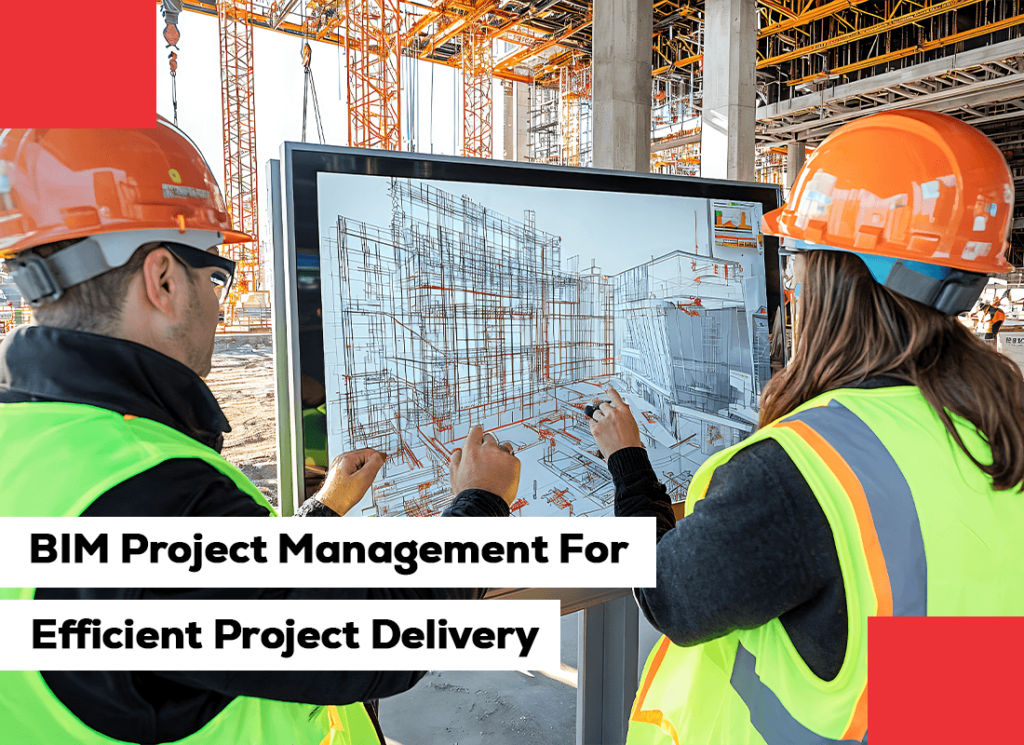
In today’s fast-paced construction and infrastructure landscape, delivering projects on time, within budget, and with minimal errors is no longer optional, it’s expected. For architecture, engineering, and construction (AEC) firms across Canada, the shift toward digital processes has made BIM Project Management a critical component of successful project execution. By combining intelligent modeling, real-time collaboration, and data-driven decision-making, BIM enables teams to streamline workflows and eliminate inefficiencies. However, true value lies not just in adopting BIM tools, but in managing them effectively across the entire project lifecycle. This is where a structured BIM project management approach becomes essential. Understanding BIM Project Management It refers to the strategic planning, execution, and monitoring of building information modeling processes throughout a project. It ensures that all stakeholders, from architects and engineers to contractors and clients, work in a coordinated and efficient manner. Unlike traditional project management methods, BIM integrates design, documentation, and construction into a unified digital environment. This allows teams to: Visualize projects in 3D with accurate data Detect clashes before construction begins Improve collaboration across disciplines Enhance cost and time efficiency For firms aiming to scale and compete, adopting BIM management practices is no longer a luxury, it’s a necessity. The Role of BIM In Efficient Project Delivery Efficiency in project delivery is defined by speed, accuracy, and coordination. BIM plays a vital role in achieving all three by centralizing project information and reducing manual dependencies. With BIM Project Management, teams can: Minimize design errors through early clash detection Improve scheduling with integrated project timelines Enhance cost estimation using real-time data Maintain consistency across documentation This integrated approach ensures a smoother workflow and reduces costly delays during construction. Key Components of Effective BIM Project Management To maximize results, BIM implementation must be supported by a structured management framework. The following components are essential: 1. Clear Project Planning Every successful BIM project starts with a well-defined execution plan. This includes: Setting project goals and deliverables Defining roles and responsibilities Establishing modeling standards A strong foundation ensures that all stakeholders are aligned from the beginning. 2. Standardized Processes Consistency is critical in BIM workflows. Standardization helps maintain quality and reduces confusion across teams. Key elements include: File naming conventions Model structuring guidelines Documentation protocols By integrating standardized workflows, firms can achieve better scalability and repeatability. 3. Advanced BIM Modelling Accurate and detailed models are at the core of BIM success. Leveraging professional BIM modelling services ensures that designs are precise, coordinated, and ready for execution. These services help: Create detailed 3D representations Improve design visualization Support better decision-making For complex projects, outsourcing BIM modelling services can significantly improve quality while saving time. 4. Seamless Coordination Coordination between multiple disciplines is one of the biggest challenges in construction projects. BIM simplifies this through integrated models and collaborative platforms. BIM simplifies this through integrated models and collaborative platforms. Identify and resolve clashes early. Improve communication between stakeholders Ensure alignment across all project phases This reduces rework and enhances overall efficiency. 5. Integration with Construction Processes BIM is not limited to design, it extends into construction planning and execution. By aligning BIM with on-site activities, firms can improve project outcomes. This includes: 4D scheduling for better timeline management 5D cost estimation for budget control Real-time progress tracking Such integration ensures that projects move forward smoothly without unexpected disruptions. Leveraging External Expertise For many firms, especially small and mid-sized ones, managing BIM in-house can be resource-intensive. Partnering with experts offering BIM services provides practical and scalable solutions. External providers bring: Specialized expertise Advanced tools and technologies Faster turnaround times By leveraging BIM services, firms can focus on core competencies while ensuring high-quality project delivery. The Importance of BIM Consulting Strategic guidance is crucial when implementing BIM across projects. This is where BIM consulting services play a key role. These services help firms: Develop BIM execution plans Select the right tools and workflows Train internal teams Optimize project performance Working with experienced providers of BIM consulting services ensures a smoother transition and long-term success. Benefits of BIM Project Management Adopting a structured BIM approach delivers measurable advantages across all stages of a project. Improved Efficiency With centralized data and automated workflows, teams can complete tasks faster and with greater accuracy. Reduced Costs Early detection of design issues minimizes costly rework and delays. Better Collaboration Shared models enable real-time communication between stakeholders. Enhanced Quality Accurate modeling and standardized processes lead to higher-quality outcomes. Faster Project Delivery Streamlined workflows ensure that projects are completed on time or ahead of schedule. These benefits highlight why it is becoming a standard practice in the AEC industry. Overcoming Common Challenges While BIM offers numerous advantages, implementation can come with challenges. Understanding and addressing these issues is key to success. Resistance to Change Teams may be hesitant to adopt new workflows. Proper training and clear communication can ease the transition. Skill Gaps BIM requires specialized expertise. Investing in training or outsourcing to a provider offering BIM services can bridge this gap. Significant Initial Investment Although initial costs include tools and training, these costs can be offset by later savings. Coordination Problems Poorly managed BIM workflows can be very complicated. Therefore, to ensure that the process runs smoothly, a structured process is necessary. Successful Implementation Best Practices A company ought to use established best practices to use BIM effectively: Launch pilot projects before expanding use. Train and build up your teams. Use cloud-based tools for file sharing. Keep clear lines of communication open. Track results and make ongoing improvements to the workflow. The best practices above form a strong foundation for long-term success. BIM’s Role In Future Project Management Due to its rapid advancement, Building Information Modeling is, more than ever before, an easily accessible tool for the management of construction projects. The use of innovative technologies, such as Artificial Intelligence, Digital Twin Technology, and Cloud-based collaboration solutions, is changing the way organizations perform project management. In the near future, BIM-based project management will play an even larger role in: Greater enhancement of sustainability