
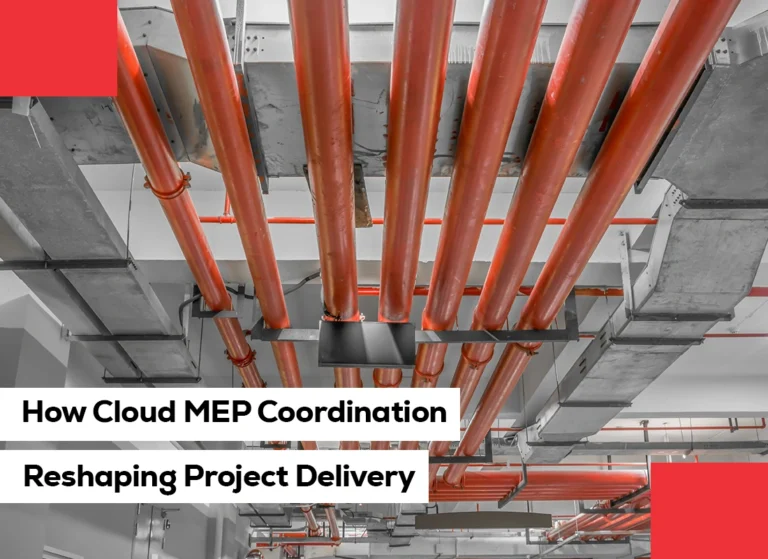
How Cloud MEP Coordination Reshaping Project Delivery
Construction projects are becoming more complex, distributed, and time-sensitive. Multiple teams may work across different locations, while mechanical, electrical, and plumbing systems must fit within increasingly crowded building spaces. In this environment, traditional coordination methods can create delays, communication gaps, and costly rework. Geninfo Solutions helps businesses understand how digital workflows can improve project coordination and support more predictable delivery.
Cloud-based workflows are changing the way teams manage design information. Instead of relying only on disconnected files and occasional coordination meetings, project stakeholders can work with shared, updated information in a collaborative digital environment. This shift is making MEP coordination services more connected, responsive, and practical for modern construction projects.
What Is Cloud MEP Coordination?
Cloud MEP coordination involves using cloud-based platforms to share, review, manage, and coordinate mechanical, electrical, and plumbing systems throughout a project lifecycle.
Traditionally, different teams often worked on separate files. These files were then exchanged through emails, shared drives, or manual uploads. While this approach can work for smaller projects, it becomes difficult to manage when multiple disciplines are making changes at the same time.
Cloud coordination creates a more connected workflow. Architects, engineers, contractors, and coordinators can access the latest project information, review design changes, identify conflicts, and communicate about issues from a shared digital environment.
This does not eliminate the need for skilled professionals. Instead, it gives them better visibility and a more reliable way to coordinate complex systems.
Why Traditional MEP Coordination Services Create Challenges
MEP systems often compete for limited space within ceilings, walls, shafts, plant rooms, and service areas. A duct may conflict with a structural beam, while electrical services may require access zones that affect plumbing routes.
When these issues are discovered only during construction, the consequences can include:
- Rework
- Delayed installation
- Additional material costs
- Increased RFIs
- Design revisions
- Coordination disputes
Traditional workflows can also create problems when teams use outdated drawings. If one discipline continues working from an older version of a design, the coordination process becomes less reliable.
This is where cloud-based MEP coordination services provide a major advantage by improving access to current project information.
How Cloud Technology Is Changing MEP Coordination
1. Creating A Shared Project Environment
Cloud platforms allow project teams to work from a common digital environment. Models, drawings, coordination information, and issue updates can be accessed according to project permissions.
This helps reduce the confusion caused by multiple versions of the same file.
Instead of asking which drawing is the latest, teams can follow a structured information workflow where updates are easier to track and share.
2. Improving Real-Time Collaboration
Construction projects often involve teams working from different offices, cities, or countries. Cloud-based collaboration allows them to review project information without being physically present in the same location.
A coordination issue can be identified by one team, assigned to the responsible stakeholder, reviewed by another, and updated without relying entirely on long email chains.
This makes BIM coordination services more effective for distributed project teams. The value comes not only from 3D modeling but also from creating a more connected decision-making process.
3. Detecting Conflicts Earlier
A coordinated digital model can bring architectural, structural, mechanical, electrical, and plumbing information together for review.
This makes it easier to identify conflicts before installation begins. These may include:
- Physical clashes between systems
- Insufficient maintenance clearances
- Conflicting service routes
- Access problems around equipment
- Inadequate space for installation
The earlier a problem is identified, the easier it is generally to resolve. Cloud collaboration supports this process by making updated coordination information available to relevant team members.
4. Supporting Faster Issue Resolution
Coordination is not simply about identifying problems. The real value comes from resolving them efficiently.
Cloud platforms can help teams:
- Identify a coordination issue.
- Assign it to the relevant team.
- Add comments or visual references.
- Track its status.
- Review the updated design.
- Close the issue after verification.
This creates a clearer record of project decisions.
Instead of losing important information in long email conversations, teams can maintain a more structured history of coordination issues and their resolutions.
5. Connecting Coordination With Construction Planning
Cloud MEP coordination is increasingly being connected with broader project delivery workflows.
Once coordinated information is available, it can support the following:
- Installation planning
- Fabrication workflows
- Quantity extraction
- Construction sequencing
- Site communication
- Quality checks
This makes BIM coordination services useful beyond the design stage. A coordinated model can become a reference point for different project stakeholders, provided the information is developed to the required level of detail.
The objective is not to create an unnecessarily complex model. The objective is to create useful information that supports actual project decisions.
6. Improving Project Visibility Through Cloud Data
One of the biggest benefits of cloud-based coordination is improved visibility.
Project managers can gain a clearer understanding of:
- Open coordination issues
- Pending approvals
- Design changes
- Model updates
- Coordination progress
- Upcoming deliverables
This supports better BIM project management because decisions can be based on more current project information.
Instead of waiting for a formal meeting to discover that a coordination problem is affecting progress, teams can monitor issues throughout the project.
7. Supporting Better Construction Decisions
Cloud-based coordination can also improve decision-making before work reaches the site.
For example, teams can review whether a service route is practical before installation begins. They can assess equipment access, identify conflicts between trades, and evaluate design changes in a shared environment.
This is particularly valuable for hospitals, commercial buildings, industrial facilities, data centers, and other projects with dense MEP systems.
When project information is easier to access and understand, teams can spend less time searching for information and more time solving actual construction problems.
The Role Of Coordination Drawings In Modern Project Delivery
Although 3D models are becoming increasingly important, coordination drawings remain valuable for construction teams.
Site teams often need clear, practical documentation that shows how systems should be installed. These drawings may include coordinated layouts, sections, details, equipment locations, and service routes.
Cloud-based workflows improve the relationship between the model and the drawing. When changes are made during coordination, the relevant documentation can be updated as part of a more structured process.
This reduces the risk of construction teams relying on outdated information.
The effectiveness of these drawings still depends on model accuracy, project standards, and proper review procedures. Cloud technology supports the process, but it does not replace quality control.
Cloud MEP Coordination And CAD Workflows
Many construction teams continue to use CAD-based documentation as part of their daily operations. This means cloud coordination does not necessarily require every project participant to abandon existing tools.
In many workflows, CAD services continue to support 2D documentation while BIM models provide additional coordination and information capabilities.
The two approaches can work together when project standards clearly define how information is exchanged.
For example, a coordinated model may support design review and clash detection, while updated drawings communicate practical installation information to site teams.
What Does This Mean For The Future Of MEP Coordination?
Cloud technology is not simply changing where project files are stored. It is changing how project teams communicate, review information, and manage coordination.
The future of MEP coordination services is likely to involve stronger connections between modeling, issue management, documentation, fabrication, and construction activities.
However, technology alone cannot solve coordination problems. Successful delivery still depends on:
- Clear project standards
- Accurate models
- Defined responsibilities
- Regular reviews
- Skilled coordinators
- Consistent information management
A cloud platform can make collaboration easier, but teams still need disciplined workflows to use it effectively.
Summary
Cloud MEP coordination services are helping construction teams move away from fragmented information exchange and toward more connected project delivery. By improving collaboration, supporting earlier clash detection, strengthening issue tracking, and connecting models with coordination drawings, cloud workflows can create greater visibility throughout the construction process.
As projects become more complex, digital coordination will continue to play a central role in improving predictability and reducing avoidable rework. Geninfo Solutions supports businesses looking to understand and adopt modern BIM workflows that align technology with practical construction requirements.
FAQs:
1. What is cloud MEP coordination?
Cloud MEP coordination is the process of managing and coordinating mechanical, electrical, and plumbing systems through shared cloud-based digital platforms.
2. How does cloud coordination reduce construction errors?
It allows teams to review updated project information, identify conflicts earlier, and resolve coordination issues before they create problems during installation.
3. Are coordination drawings still important when using BIM?
Yes. Coordination drawings remain useful for communicating practical installation information to contractors and site teams.
4. Can CAD and cloud BIM workflows work together?
Yes, CAD services can continue supporting 2D documentation while cloud-based BIM workflows support 3D coordination and information management.
5. What role does BIM project management play in cloud coordination?
BIM project management helps organize models, deliverables, responsibilities, coordination processes, and project information so teams can work more efficiently within a shared digital environment.